Capabilities
Six stages.
One building.
Sourcing, sampling, cutting, sewing, printing, embroidery and dispatch all happen at 104 Sandali Street. Nothing is subcontracted, nothing waits on a courier, and one team is answerable for the whole garment.
- Lead time
- From 2 – 3 days
- Sampling
- 7 – 10 days
- Decoration
- In house
- Export
- DHL & FedEx worldwide
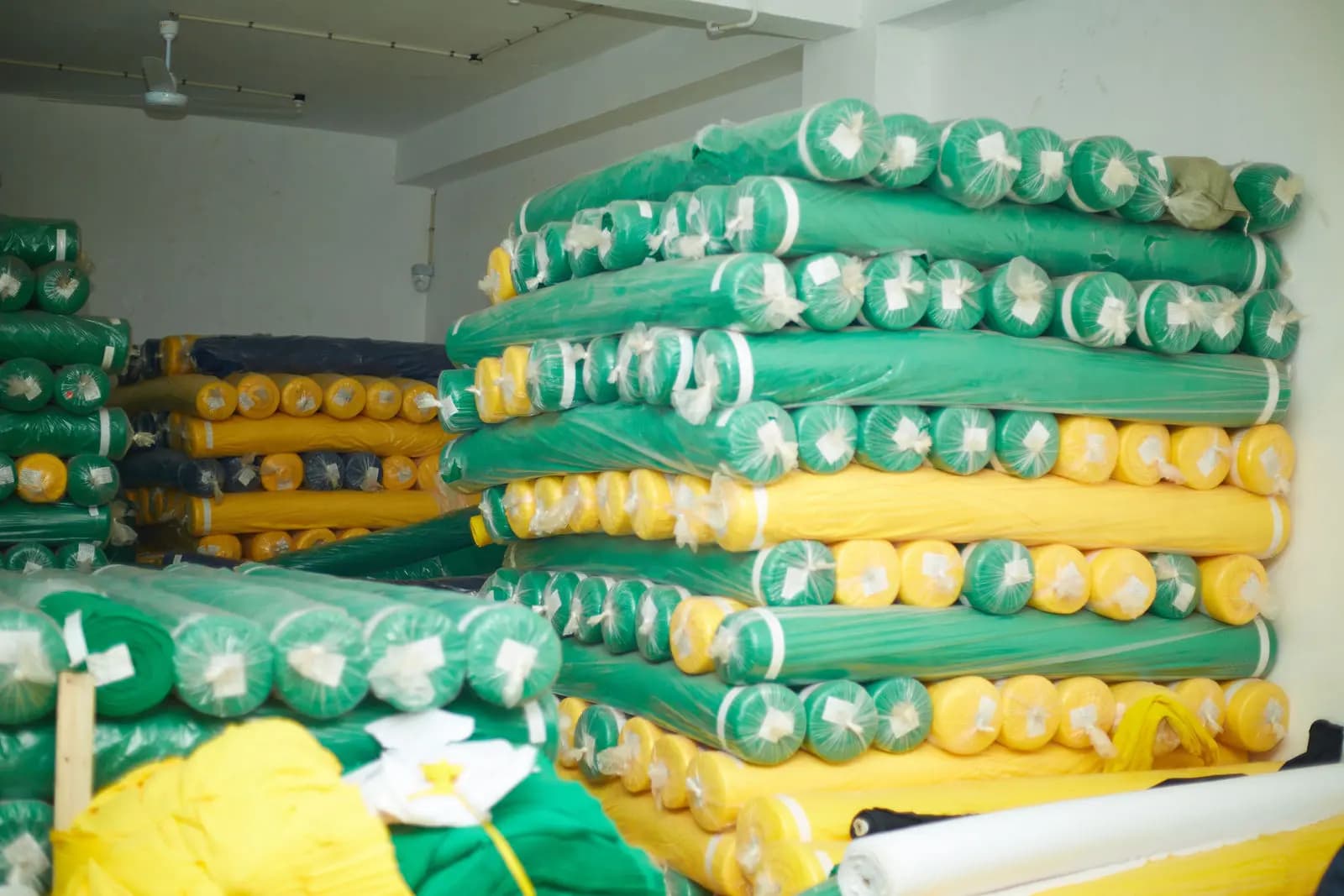
Material Sourcing
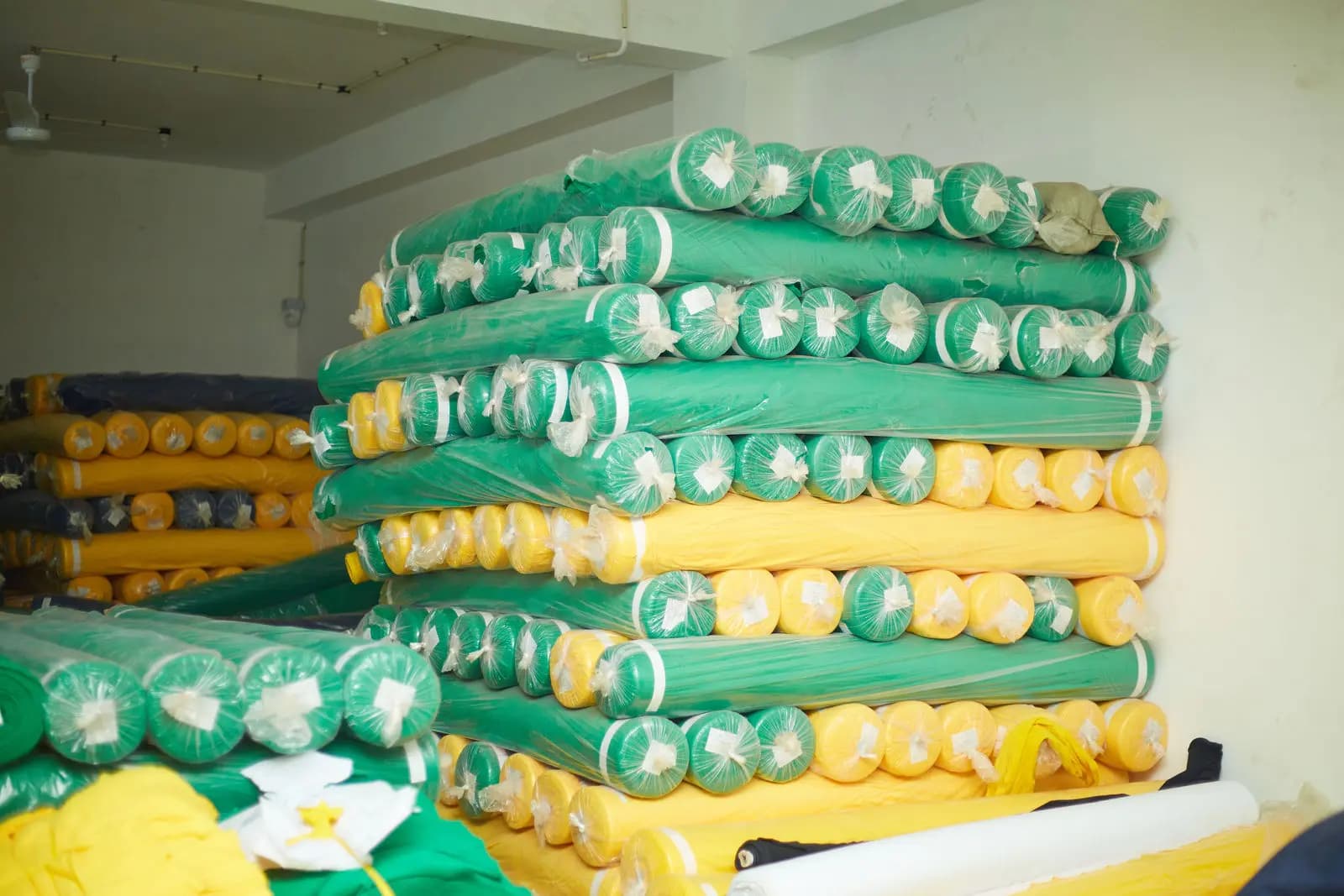
Every order starts with the fabric, because nothing downstream can fix a bad choice here. We specify against your end use — how the garment will be washed, how hot the wearer will be, whether it has to hold a large print — and then source it.
We buy locally wherever the specification allows, which shortens lead times and keeps money in the Tanzanian textile chain. Where a spec genuinely requires imported yarn or fabric, we import it and tell you plainly what that does to cost and timing rather than absorbing the delay quietly.
Fabric, thread and trim references are recorded against your account so a repeat order in a year is built from the same inputs as the first one.
- Fabrics
- Cotton jersey, pique, fleece, drill, poly-cotton blends
- Weights
- 140 – 320 GSM knit, 220 – 300 GSM woven
- Sourcing
- Local first, imported where the spec requires
- Records
- Fabric, thread and Pantone refs held per client
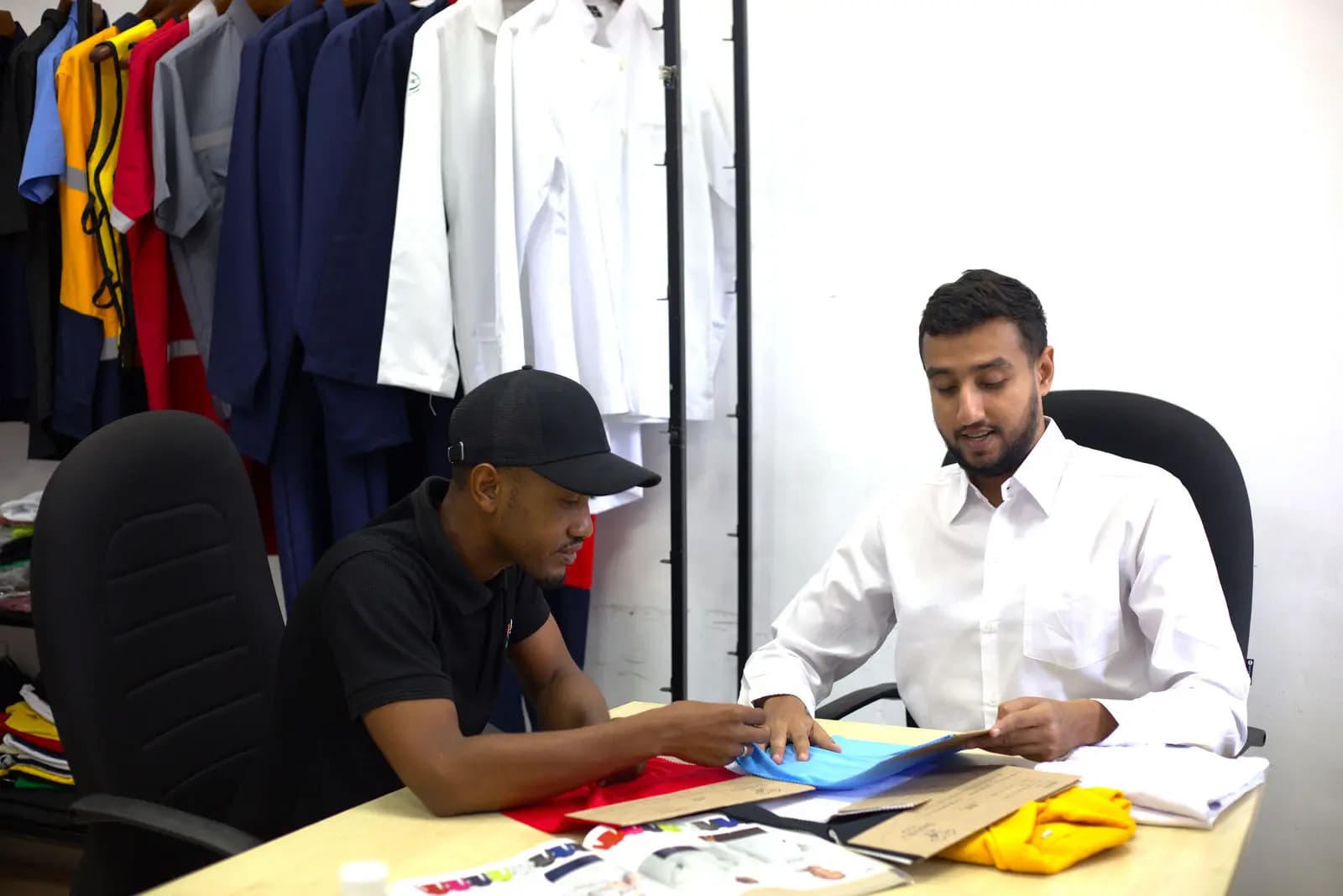
Sample Making
We do not put anything into production that a client has not held. A sample is patterned, cut and sewn to your specification, sent for comment, revised where needed, and signed off. Only then does bulk cutting start.
Samples carry a fee, and that fee is deducted from your order when you place it. The point is not to make money on samples — it is to make sure only serious specifications reach the floor.
For custom work we pattern from a tech pack, a sketch or a reference garment. For catalogue styles a stock sample in your chosen fabric and colour is usually enough to confirm fit and decoration placement.
- Turnaround
- 7 – 10 days for a custom first sample
- Fee
- Charged, then deducted from your production order
- Input accepted
- Tech pack, sketch or reference garment
- Sign-off
- Approved sample retained for repeat orders
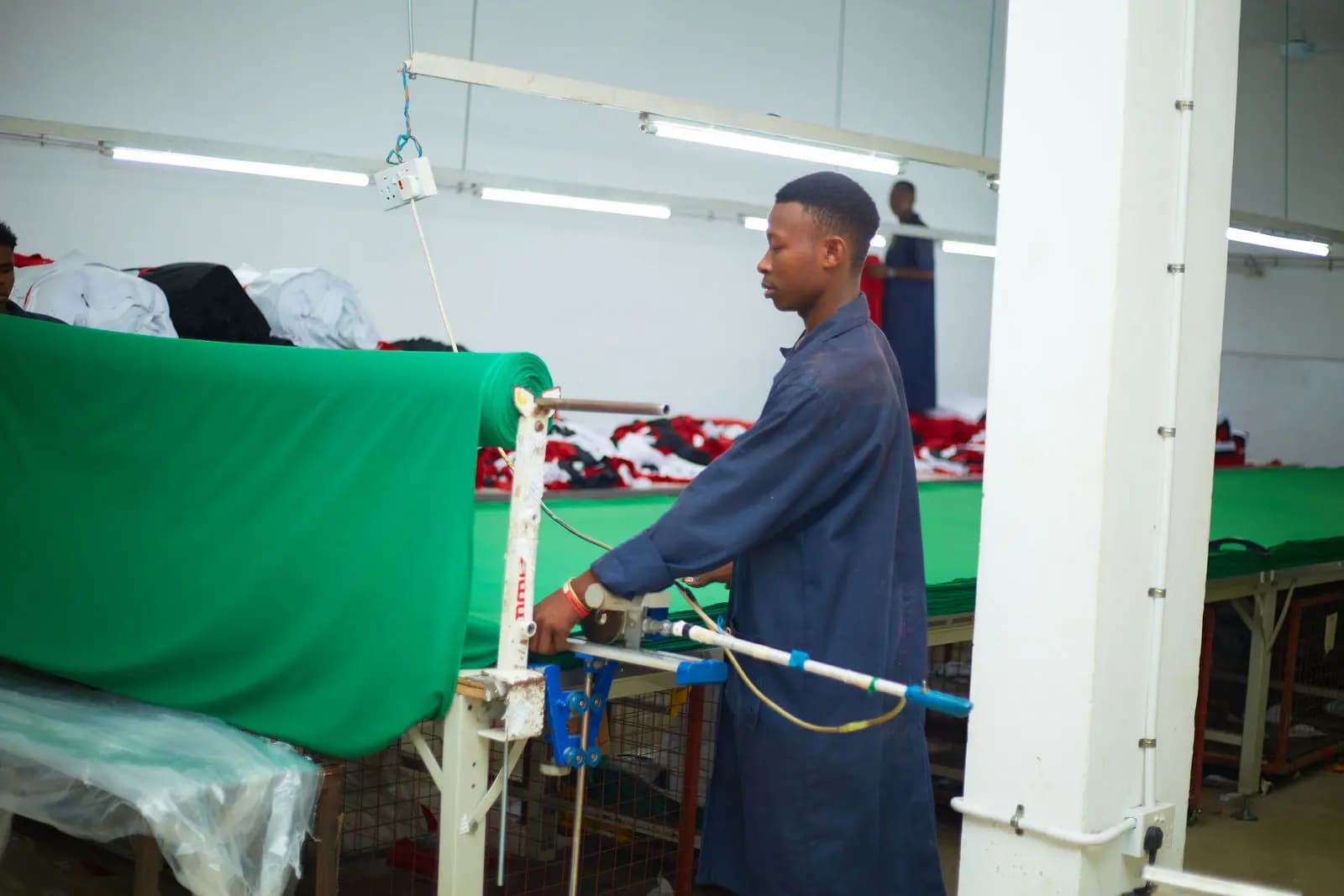
Cut, Make & Trim
CMT is what we are. Patterns are graded across the size run, fabric is laid and marked to get the most out of every metre, and cutting is checked against the marker before the blade moves.
Sewing runs in lines by operation, with the same machinist doing the same seam across a batch — which is how you get consistency across five hundred units rather than five hundred slightly different garments. Necks are taped shoulder to shoulder, side seams are closed, and hems are twin-needled.
Quality control is in-line rather than only at the end. Garments are checked during sewing, again at trimming, and a final inspection covers measurement, stitch quality, decoration placement and colour consistency before anything is packed.
- Capability
- Pattern grading, marker making, lay cutting, line sewing
- Lead time
- 2 – 3 days on stock fabric, 7 – 10 on a custom design
- QC
- In-line checks plus final inspection on measurement and finish
- Finishing
- Trimming, pressing, folding, polybag and carton packing
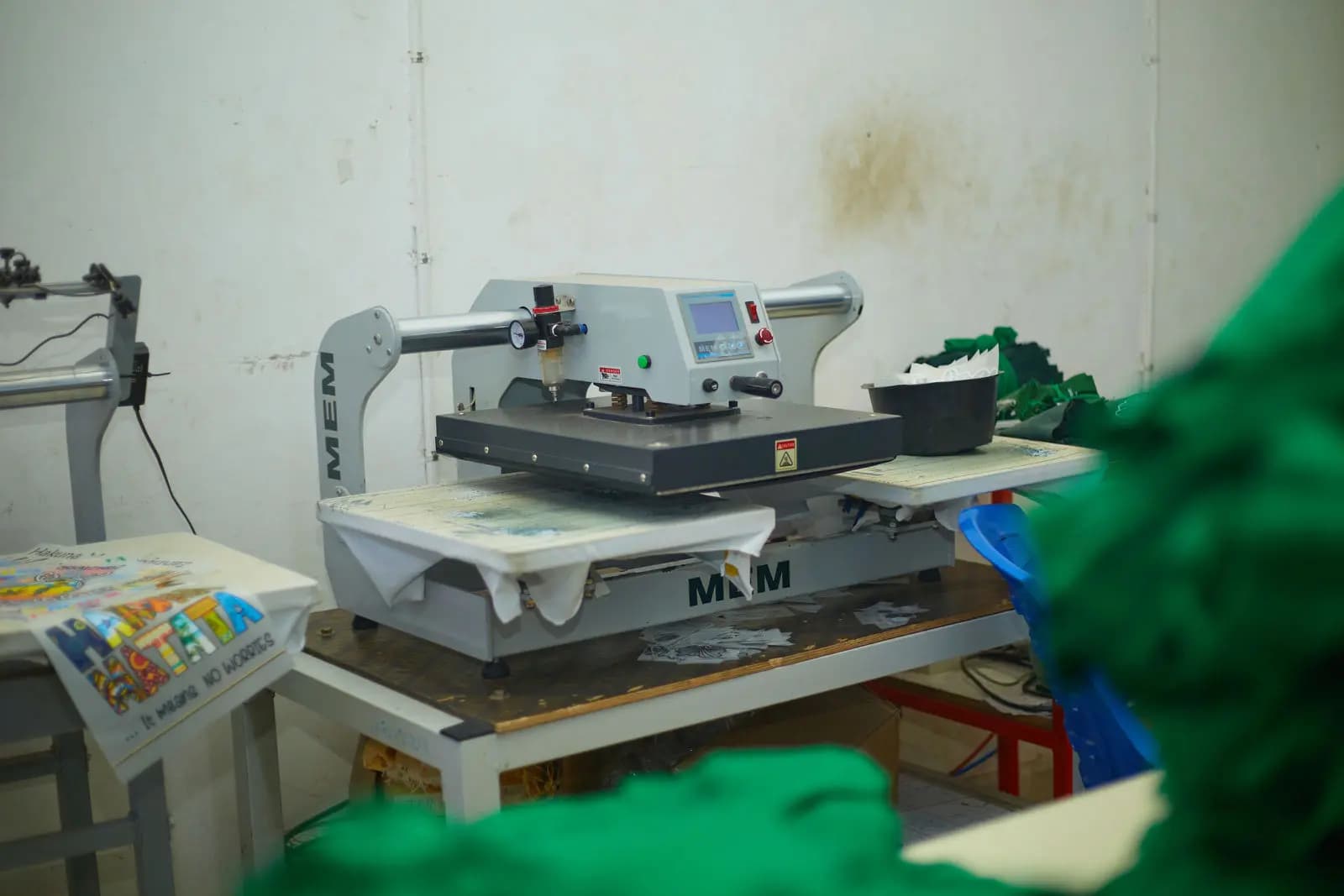
Printing
Printing happens under our own roof. That is not a small thing — it means a printed garment never leaves the factory mid-process, and it is the single biggest reason an order can leave in two or three days.
We screen print for volume and colour strength, DTF for short runs and full-colour artwork on any fabric, and sublimation where the design runs edge to edge or the order is a handful of pieces. Plastisol and water-based inks are both available; water-based sits softer into the fabric and is the better call on premium blanks.
Artwork is separated and screens are made in house. A print sample goes on the actual garment fabric, not a swatch, because the same ink reads differently on a 160 GSM Champion tee than it does on a 200 GSM Bingwa Pamba.
- Methods
- Screen printing, DTF, sublimation, heat transfer
- Inks
- Plastisol and water-based, puff and high-density
- Placement
- Chest, back, sleeve, large format, all-over panels
- Proofing
- Print sample on your actual production fabric
Embroidery
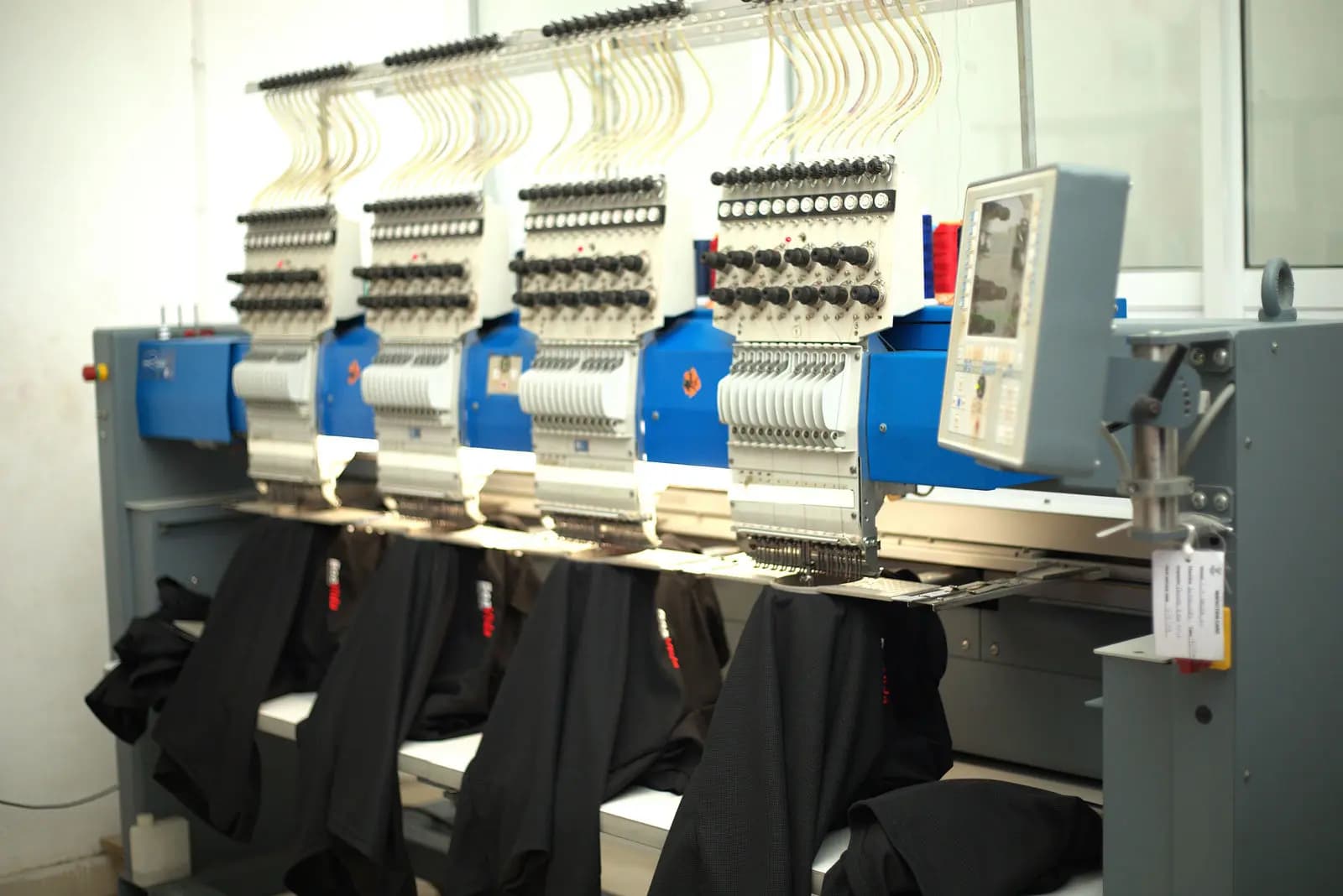
Embroidery is the right answer for corporate work. It survives commercial laundering, it does not crack, and it reads as considered in a way print does not on a polo or a shirt.
Your logo is digitised in house into a stitch file, stitched onto a sample of your production fabric, and approved before bulk. Stitch density and underlay are tuned to the fabric — a mark that looks crisp on pique will pucker on jersey if the file is not adjusted for it.
Thread colours are matched to your brand references and the thread codes are kept on file, so a batch stitched next year matches the one stitched today.
- Digitising
- Logo converted to a stitch file in house
- Placement
- Left chest, sleeve, back yoke, collar, cuff, cap front
- Thread
- Brand colour matched, thread codes held on file
- Approval
- Stitch-out on production fabric before bulk
Delivery & Export
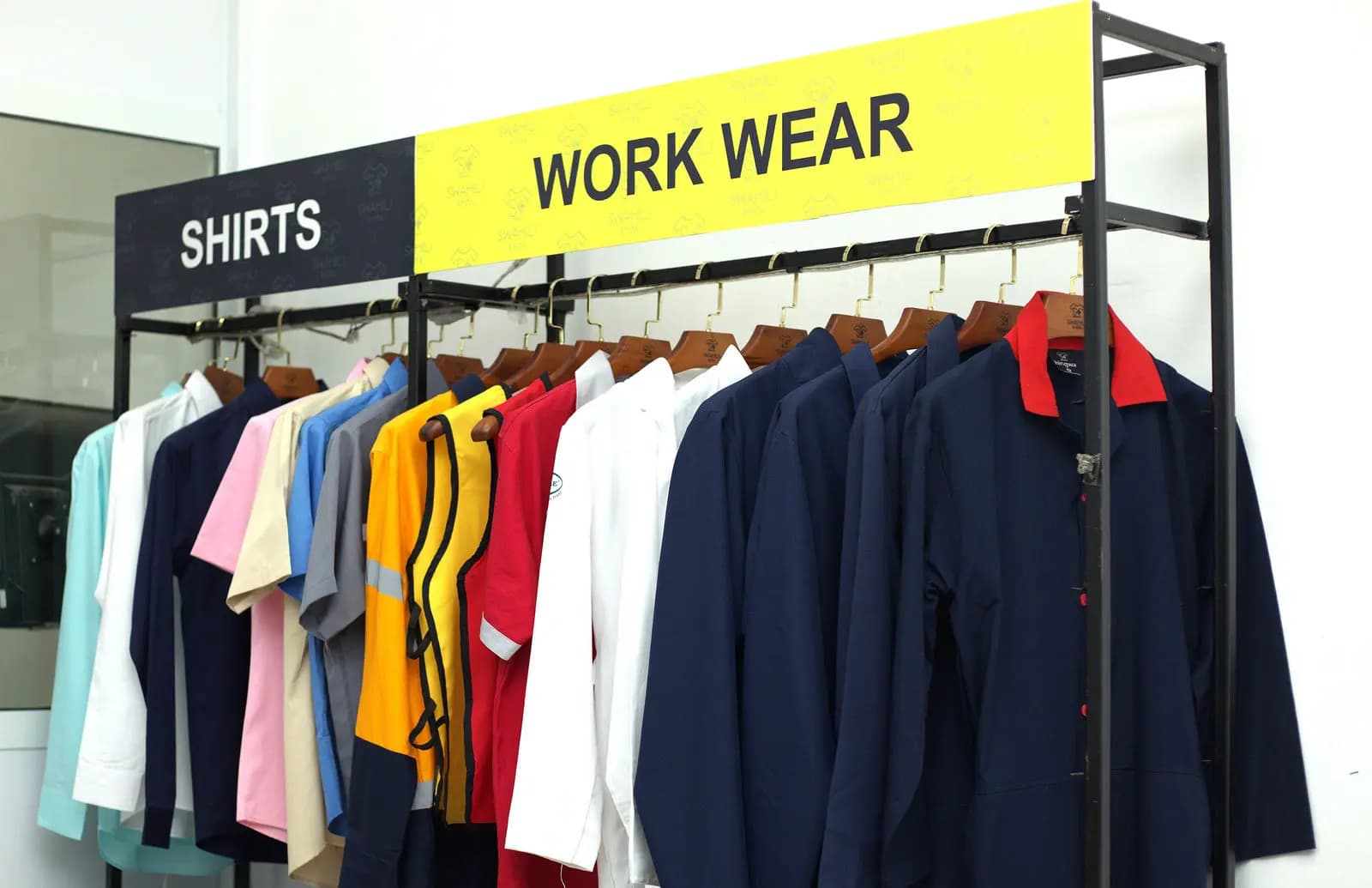
Finished goods are pressed, folded, polybagged and cartoned. For uniform rollouts we can pack per site, per department or per named employee with size labelling on the bag, which turns distribution into a delivery rather than a sorting job.
Local delivery covers Dar es Salaam and up-country Tanzania. International orders ship by DHL or FedEx, and Tanzania's AGOA eligibility is worth discussing early if you are selling into the United States.
Delivery costs are carried by the client and quoted transparently at the point of order, so the number you approve is the number you pay.
- Local
- Dar es Salaam and up-country Tanzania
- International
- Worldwide via DHL and FedEx
- Packing
- Per site, per department or per named employee
- Export
- AGOA-eligible for duty-free US market access
Vertical, on purpose.
“Most factories in this region subcontract the printing. The garment leaves, waits in a queue somewhere else, and comes back with someone else's excuse attached.”
Keeping every stage in one building is slower to build and harder to manage. It is also the only way to turn an order around in two or three days and mean it — and the only way to make sure that when something is wrong, there is nobody else to blame.
Start a production run
Send us a spec.
We'll send you a number.
Tell us the garment, the quantity and the decoration. If we are the right factory for the job you will have a quote and a lead time — and if we are not, we will say so.
Or call +255 651 100 500 · Monday – Friday, 08:00 – 17:00 EAT