Rooted in Tanzania
Locally made,
by the people,
for the people.
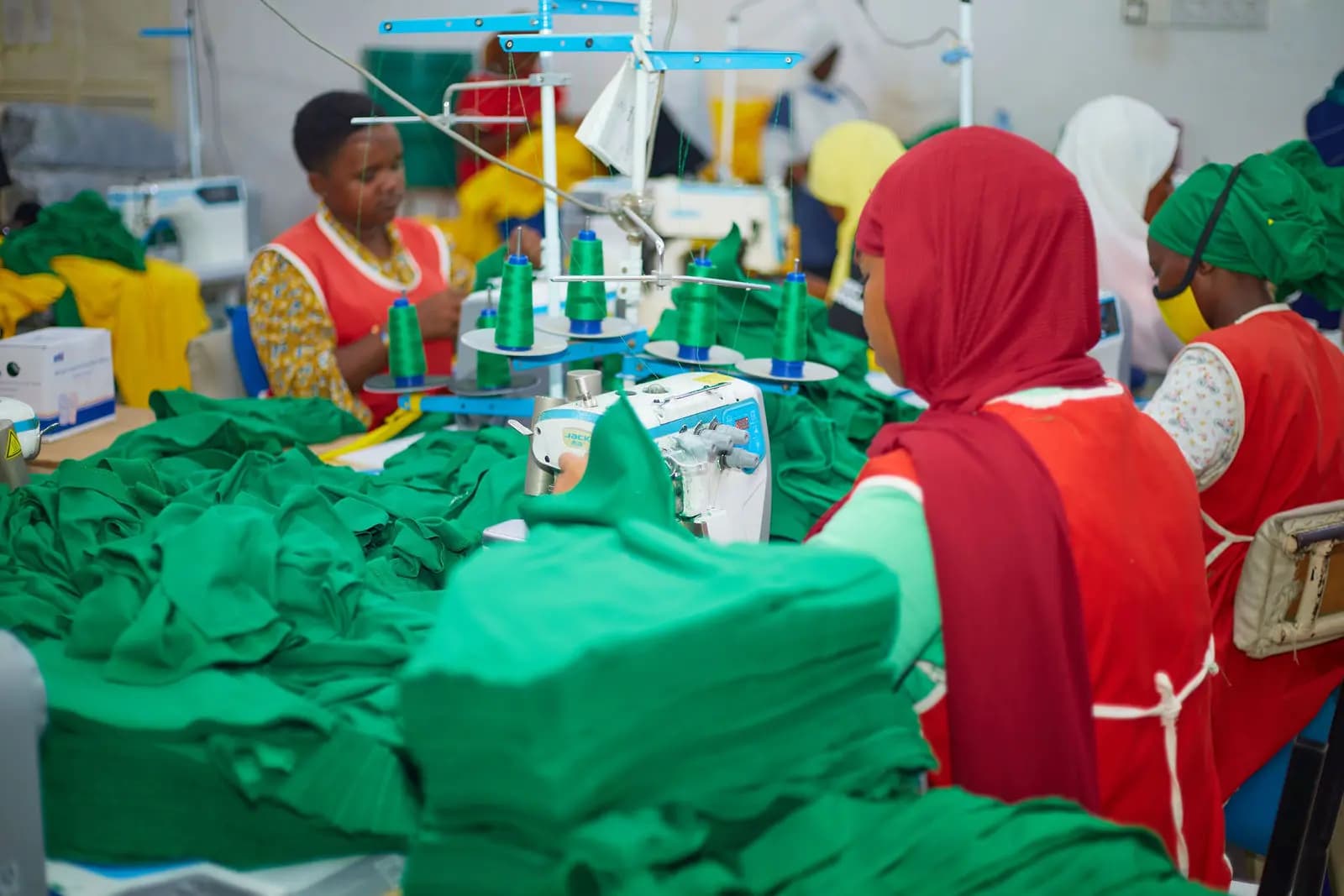
That line is on our wall, and it is not decoration. It is a description of where the fabric comes from, who operates the machines, and where the money goes.
Cotton out,
t-shirts in.
Tanzania is one of Africa's significant cotton producers. Very little of that cotton becomes a finished garment here.
It is baled, shipped, spun, knitted, dyed, cut and sewn somewhere else, and then a proportion of it comes back as imported clothing sold in Kariakoo. Every one of those stages is a job, a skill and a margin that happened in another country.
Swahili Knits exists to move as many of those stages as possible back inside Tanzania. Not as a campaign — as a functioning factory that has to compete on price, quality and lead time while doing it.
100
People employed
People before capacity
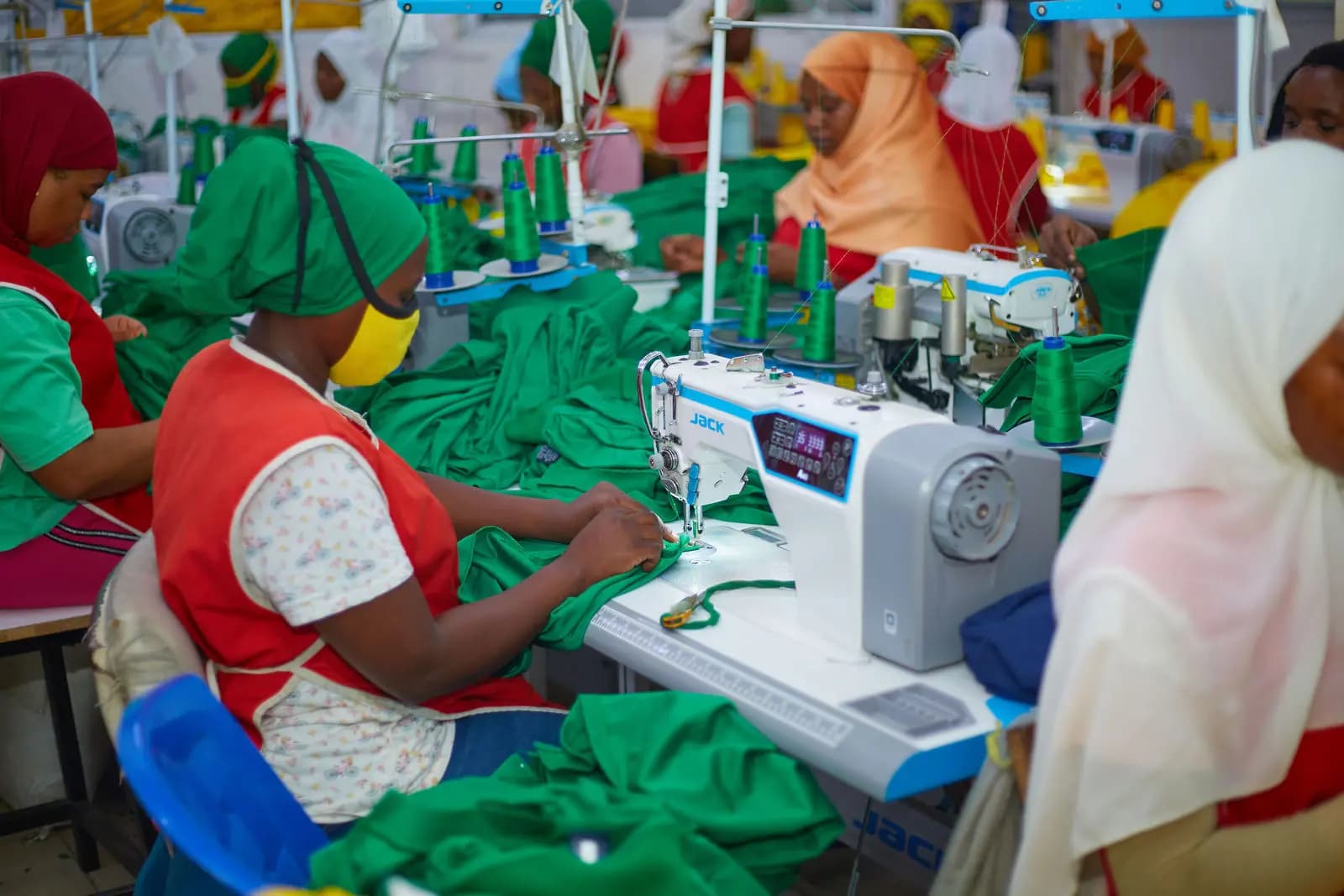
Every garment that leaves this factory was cut and sewn by someone on our payroll in Dar es Salaam. There is no broker's floor in the middle and no subcontractor two cities away whose conditions we cannot see.
That constrains how fast we can grow. It also means that when a buyer asks who made this, we can answer the question.
80%
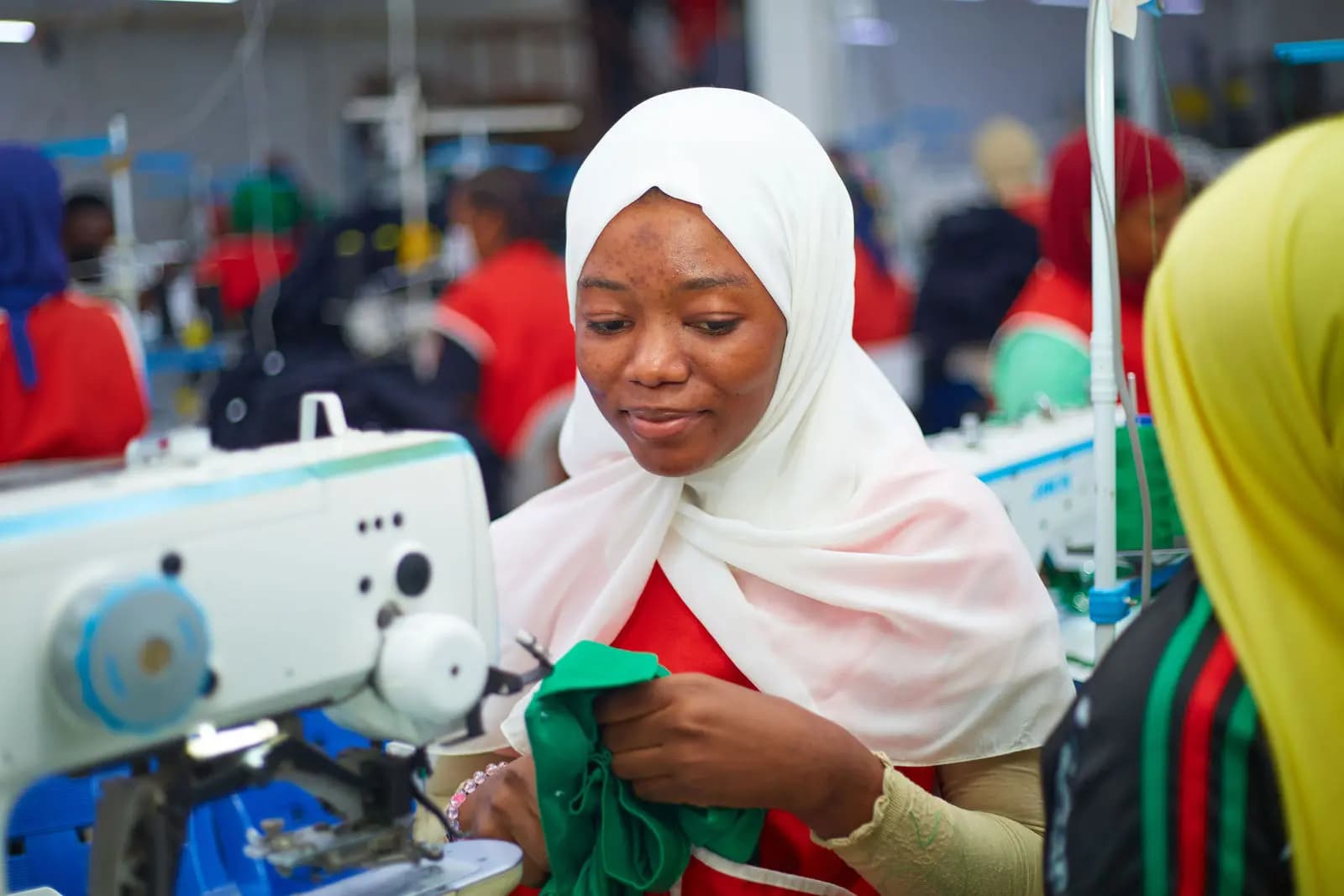
Women on the factory floor
Skills, not just shifts
Most of our machinists are women, and most joined us without formal training. We teach the machine, then the operation, then the quality standard — and then the grading and the finishing for those who want it.
Those skills are portable. A machinist who learns to sew to a commercial standard here has a trade for life, whether or not she spends it with us. We think that is the point.
100%
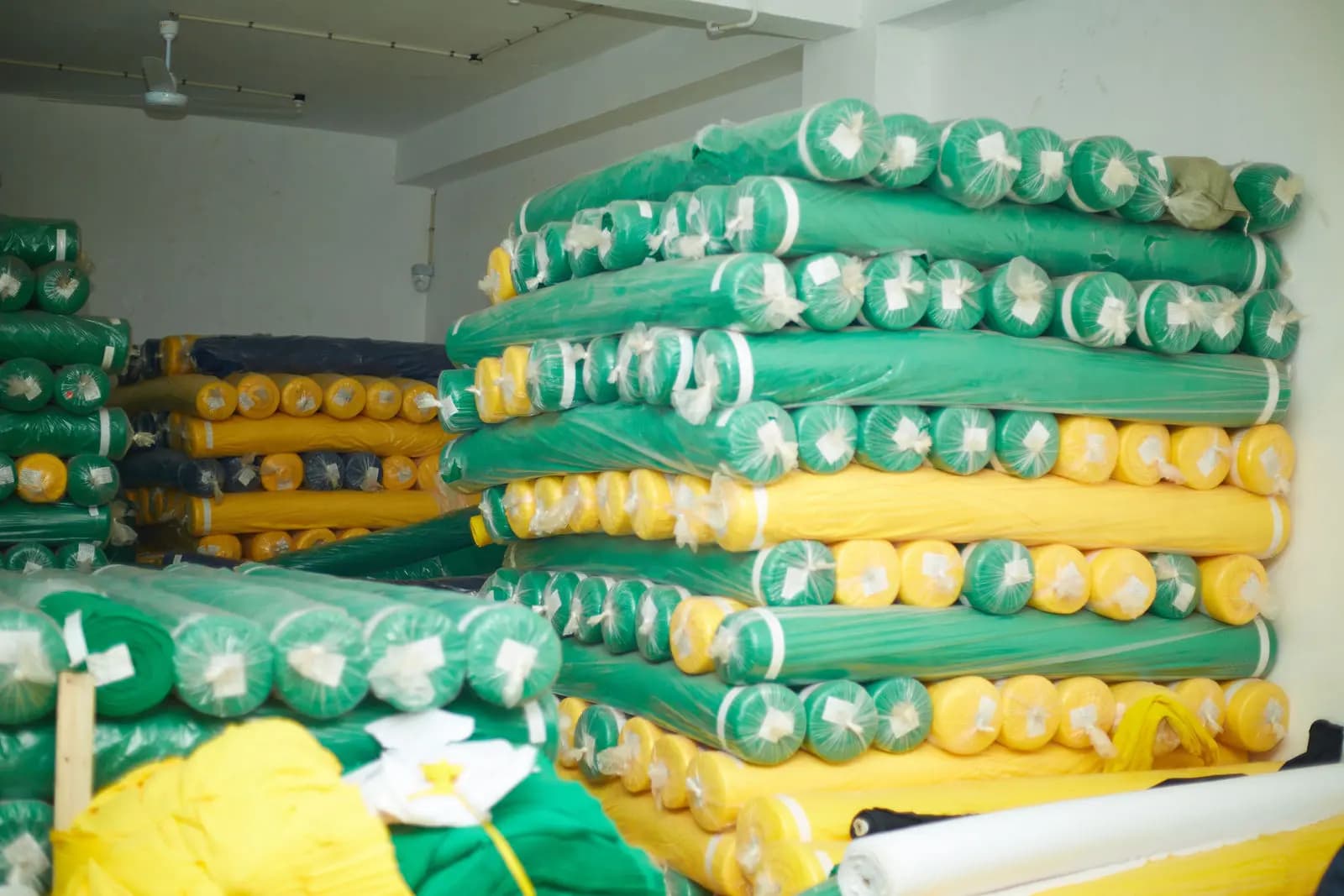
Cut, made and trimmed here
Closing the cotton loop
Tanzania grows cotton and exports most of it raw, then imports finished garments made from that same cotton at many times the value. Every stage of that chain that happens somewhere else is value that leaves the country.
We source locally wherever the specification allows and manufacture here always. It is the least complicated form of impact there is: the cutting, the sewing, the printing and the wages all stay.
Where the work shows up.
Sport
Clubs and tournaments
Team kit and event apparel for clubs, schools and tournaments — sublimated, numbered and delivered sorted by squad list rather than as a box to go through on the touchline.
Development
NGOs and trade bodies
Campaign and programme apparel for organisations working in Tanzania, made thirty kilometres from where it is handed out rather than shipped in.
Industry
Mining, construction and hospitality
Uniform and workwear programmes for the sectors that reorder every year, where the whole job is making the second batch match the first.
What we will
and won't claim.
We are not going to publish a number we cannot substantiate. What we can tell you is concrete:
- Short supply chain. Fabric sourced locally where the specification allows, and manufacturing that does not put a garment on a ship mid-process.
- Cutting waste is minimised at marker stage, because fabric is the largest line in the cost sheet and waste is money before it is anything else.
- Durable construction. Taped necks, side seams and twin-needle hems exist so a garment lasts. The most sustainable t-shirt is the one nobody replaces next year.
- Water-based inks available on request, which sit softer and use less plastic than standard plastisol.
If you need formal social or environmental audit compliance for a buyer programme, raise it early and we will tell you plainly what we currently hold and what would need to be put in place.
Make it here
Put your next run
on a Tanzanian floor.
Same specification, same quality standard, made by people you can visit. Send us the garment and the quantity and we will price it.
Or call +255 651 100 500 · Monday – Friday, 08:00 – 17:00 EAT